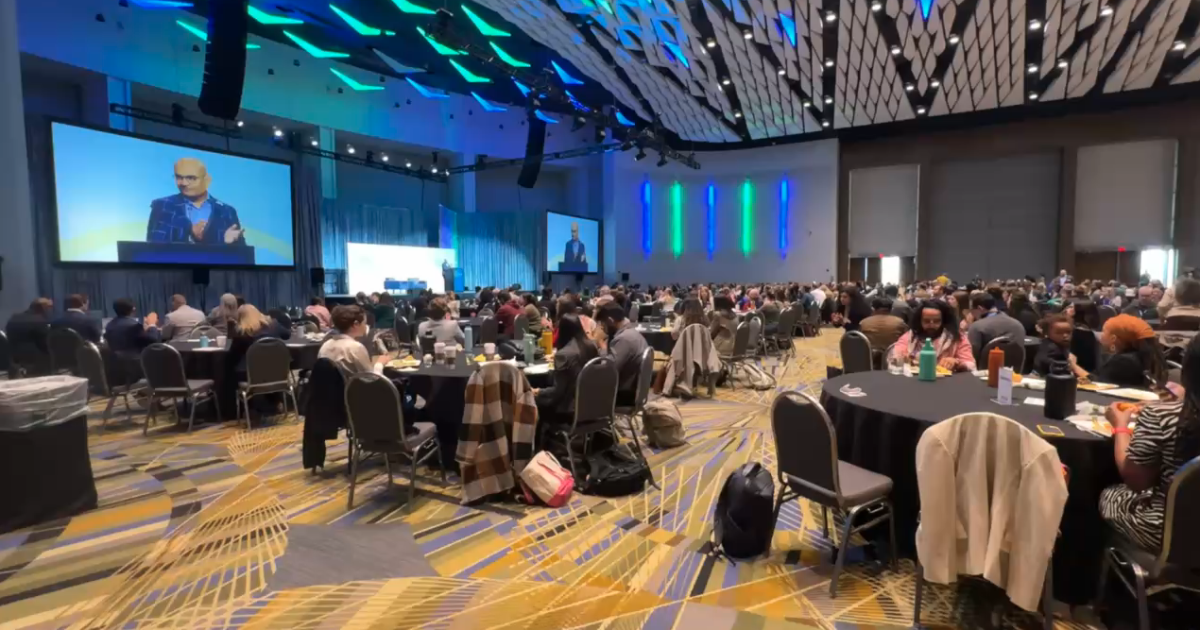
The split inside the Michigan Democratic Party over Israel and Gaza went public Sunday at Huntington Place in Detroit, and it wasn’t subtle.
U.S. Rep. Haley Stevens walked onto the convention floor and into a wall of boos. Delegates in the front rows shouted “shame” while she stood at the podium. The hostility traced directly to her backing of Israel in its war against Hamas in Gaza, a conflict that Amnesty International and a United Nations panel have each characterized as a genocide against the Palestinian people. Stevens didn’t leave. She didn’t wait for the room to settle. “Democrats, I love you, even when we disagree,” she said straight into the jeers and kept talking.
That moment told you something polls don’t. The three-way Senate race between Stevens, state Sen. Mallory McMorrow of Royal Oak, and former Wayne County Health Director Abdul El-Sayed is essentially deadlocked heading into the August 4 primary. Nearly every candidate backed by the Michigan Democratic Party Progressive Caucus won their endorsement contest Sunday, which means the delegates packing Huntington Place were running considerably left of the broader electorate Stevens is counting on when August rolls around. A convention crowd and a primary electorate aren’t the same room.
McMorrow didn’t draw boos. She did hear chants of “Abdul” trailing her as she exited the stage, which was its own signal. But she worked the day differently than Stevens, and you could see it in the choices she made before the main session even started.
McMorrow went to the Arab American Democrats caucus meeting. That group had already endorsed El-Sayed, so she wasn’t walking into friendly territory. She went anyway. One person in the room pressed her on donations from AIPAC. McMorrow said she doesn’t take AIPAC money and is backed by J Street instead. She described J Street as “an organization that supports ending the occupation, that supports ending the bombing, that supports ending the violence.”
That’s not a throwaway line in a Michigan Democratic primary. Arab American voters concentrated in Dearborn and across Wayne County have become one of the most contested blocs in state politics, and that weight has only grown since 2024. El-Sayed built his public profile as a Muslim American public health leader, and he walks into those rooms with a different kind of credibility than his opponents can replicate quickly. McMorrow’s calculation seems to be that showing up matters even when you’re not the first choice.
She told the room that “this is part of the democratic process” and said she’s willing to sit down with anyone who wants to talk. Michigan Advance was on the floor during the exchange.
El-Sayed spent parts of the afternoon in a room between caucus sessions while McMorrow moved through Huntington Place with a drumline pulling delegates toward her in the hallways. The contrast wasn’t accidental. Both campaigns understand that visibility on the floor translates to delegate counts, and delegate counts in a close three-way race with 100,000 voters still making up their minds can shift the trajectory of a primary in ways that don’t show up in polling averages.
For Stevens, Sunday’s scene presents a specific problem. Convention delegates aren’t a representative sample, but they’re an organizing infrastructure. If the progressive caucus holds together and those delegates work their precincts between now and August 4, it creates headwinds she’ll have to run against in a race where the margin between all three candidates is thin. “That’s what you get when you don’t have a message,” one attendee said, watching the reception Stevens got from the floor.
The 2026 Senate primary is shaping up as a stress test for the Michigan Democratic coalition that cracked publicly in 2024 and hasn’t fully closed since. Stevens, McMorrow, and El-Sayed each represent a different answer to what the party should prioritize and which voters it can’t afford to lose. Sunday at Huntington Place made it clear that the argument isn’t staying inside anyone’s strategy memo.