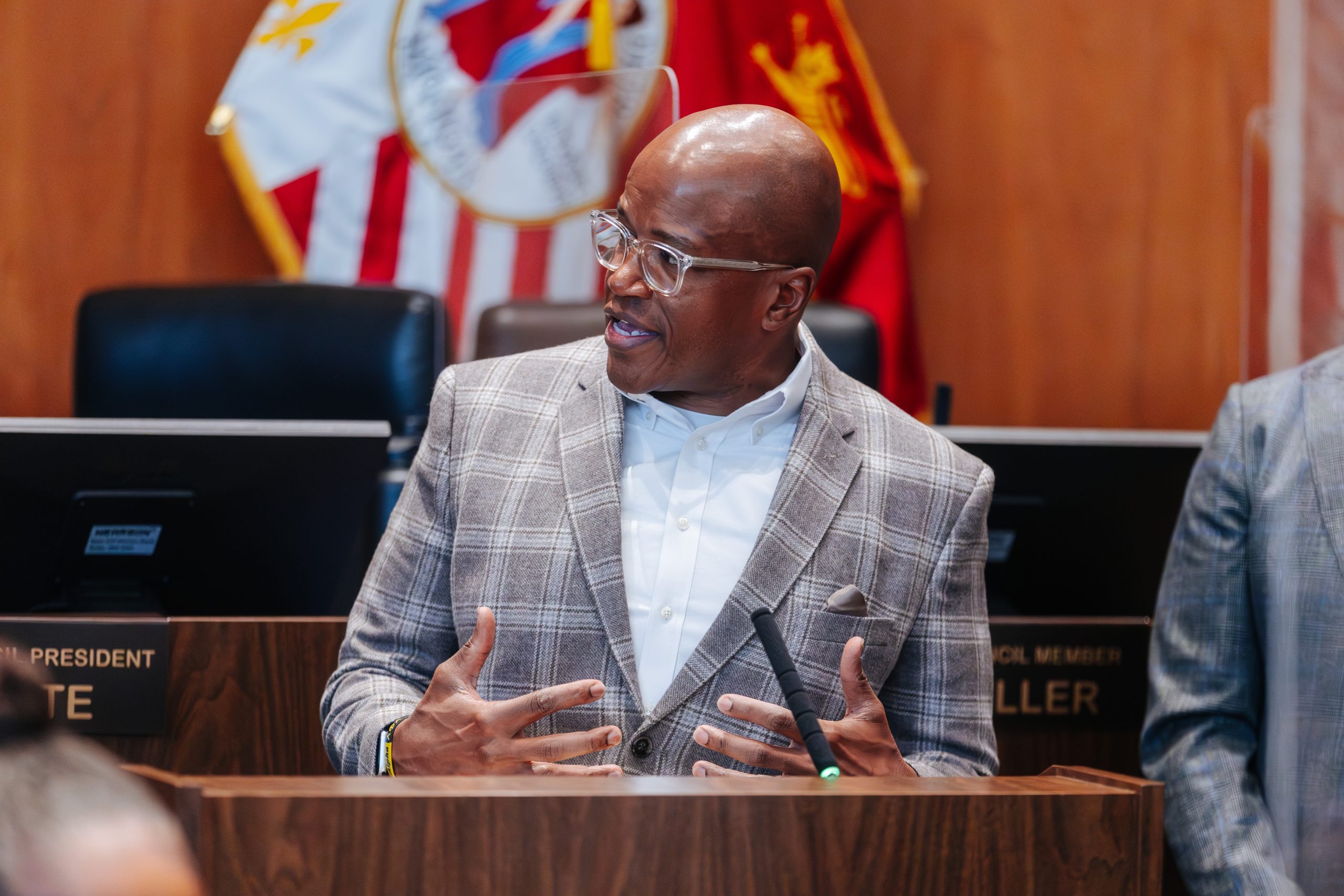
Shawn Smith was the fourth Black referee in NFL history to work a Super Bowl. That’s the number that matters. Detroit City Council made it official on April 14, voting to honor Smith with a testimonial resolution at its formal Tuesday session, and Smith showed up ready to talk about Herman Gardens, Cody High School, and why he’s not going anywhere.
“I take Detroit wherever I go. I never plan on leaving. This is my home. It will always be my home,” Smith told council members.
Smith didn’t arrive at Super Bowl LX by accident. He came into the NFL in 2015 as an umpire, grinding through years as a trusted alternate before earning the referee designation in 2018. The Super Bowl in February wasn’t handed to him. It came after a decade of work that started well before most people knew his name, back when he was just a kid from Herman Gardens who wanted to play, not officiate.
“I was a Herman Gardens kid. I never knew where athletics would take me,” he said.
That’s an honest line. Smith originally wanted to play in the NFL. When that didn’t happen, he didn’t disappear from the game. He found his way back through officiating, a route that doesn’t get romanticized the way playing does but clearly gave him what he was looking for. “It gave me satisfaction,” he said.
From Cody High to the Coin Toss
The section headers in press releases tend to flatten stories like this. Smith’s path from Cody High School to calling the coin toss at the biggest game in American sports isn’t a straight line you can summarize in a pull quote. He said he wasn’t chasing the Super Bowl as some career destination. He just wanted to stay connected to the game.
That framing is worth holding onto. It’s harder to manufacture than the version where someone always knew they’d get there.
Council President James Tate zeroed in on something Smith shared in media interviews around the time his Super Bowl LX assignment went public: that during the coin toss, there were nerves. Tate told his colleagues that detail said more about Smith than any credential could.
“He shared in media interviews that in that moment during the coin toss there was a little bit of nerves. That tells you everything you need about this man. It all started right here in the city of Detroit,” Tate said. “His journey is a reminder to young people across the city of Detroit, that hard work pays off. It represents what is possible when you stay committed to your path.”
Tate also told the room that Smith “took us with him, Detroit,” when his assignment became public in February. The reaction from the city caught Smith off guard.
“The support that I received from the city when my assignment went public, it was just overwhelming,” Smith said. “I am glad to be part of that journey to give folks some excitement.”
He didn’t come to the April 28 session to accept praise quietly. At one point Smith turned toward the council and addressed them directly: “I empathize with you guys,” Smith said, acknowledging the weight of the work they do for the city.
District 7’s Claim
District 7 is the chunk of Detroit’s west side that runs through the Cody High area. District 7 Councilman Denzel McCampbell thanked Smith and claimed him as the district’s own. Council Members Angela Whitfield-Calloway and Latisha Johnson both spoke too, and Whitfield-Calloway pushed back against the idea that Smith’s story only applies to young men.
“You are a role model, not just for young men, but young women, too,” she said.
That’s not a throwaway line at a council session. Smith’s path through Ferris State University and into the NFL’s officiating ranks is the kind of story that travels. It doesn’t require embellishment. A Herman Gardens kid who wasn’t drafted, who found another door into the game, who spent years working alternate assignments before standing at midfield in February for the Super Bowl coin toss. That’s the actual arc.
Bridge Detroit’s coverage of the council session has more from the day.