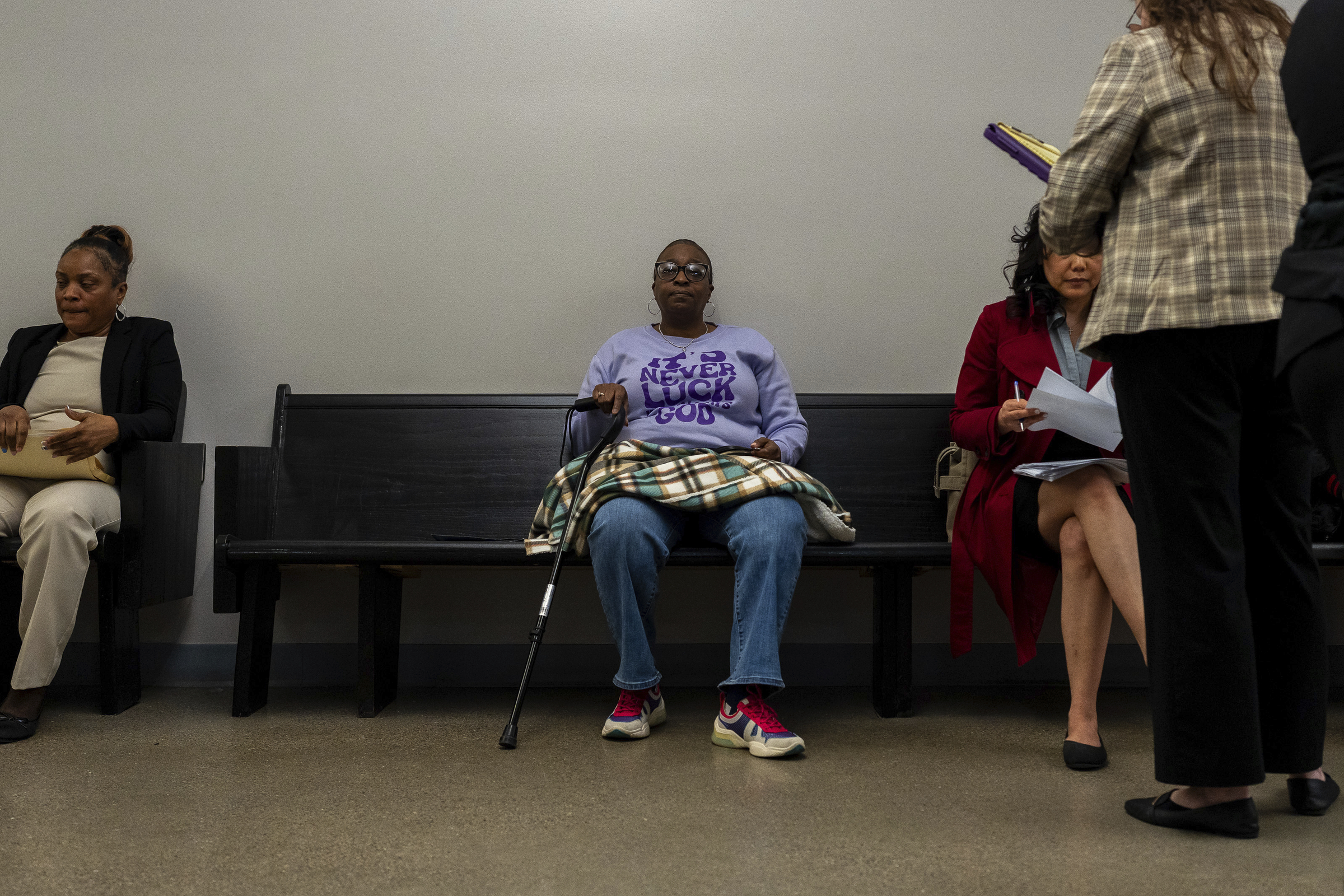
Kenya Henry was 55 years old and standing on a cane when she walked into 36th District Court in March. She hadn’t planned to be there. Nobody plans for this.
Her car got stolen first. Then she couldn’t get to work. Then she lost the job. She slipped on ice outside her building sometime after that, and by the time her landlord filed for eviction, she was heating her apartment with the oven because the heat had stopped working. No savings. No legal experience. No idea what came next.
What came next was a free attorney, courtesy of Detroit’s Right to Counsel program. That program has served thousands of low-income Detroiters since the city launched it in 2022, and the numbers on what it’s done are hard to argue with. Before Right to Counsel existed, just 4% of eligible tenants who showed up to eviction hearings walked in with full legal representation. By 2025, that number was 94%. Three years to get there.
“It was like a domino effect,” Henry said, describing how quickly her situation had collapsed.
The program runs out of room 417 at 36th District Court, a small suite divided between a waiting area and attorney cubicles where tenant advocates cycle through consultations, case reviews, and sign-ins all at once. On a Friday morning in late March, roughly 100 cases were on the docket. Attorneys and advocates from five different organizations moved through the courthouse hallways near the eviction courtrooms, doing the work that doesn’t show up in any statistic: connecting clients to services, spotting repair violations that could become a legal defense, helping people negotiate payment plans before the hearing even starts.
“It is extremely hectic,” said Tony Degard, deputy director of Detroit eviction prevention at Lakeshore Legal Aid, one of the five organizations contracted to run Right to Counsel under the city.
That infrastructure doesn’t run cheap, and the money sustaining it is burning down to a deadline.
Right to Counsel currently has roughly $3 million in American Rescue Plan Act funds to carry it through June 2026. Another $4 million in ARPA dollars follows behind that, but that second pool also has an expiration date attached. Federal pandemic relief money was never structured as a permanent municipal budget line, and when Detroit City Council passed the Right to Counsel ordinance in 2022, long-term funding was already a question without a clean answer. Council knew it. They passed it anyway, which was the right call, but it left the sustainability problem sitting there like a deferred repair.
Bridge Detroit reported on how the program is now staring at that cliff directly. The city doesn’t have a replacement funding source locked in. What happens to the attorney workforce, the advocates, the room 417 operation when the ARPA money is gone is still being worked out.
That uncertainty matters because the program does more than put lawyers in courtrooms. When funding tightens and attorney capacity shrinks, the wraparound work disappears with it. The advocate who notices a client’s boiler hasn’t worked in two months and flags it as a habitability defense. The staffer who helps a tenant restructure a payment plan and avoid a hearing entirely. That’s what room 417 actually does on a crowded Friday morning, and it can’t run on empty.
Henry’s case is exactly the kind that gets lost without it. She’d been homeless before finally securing her current apartment. When the eviction filing came, she had no financial cushion and no knowledge of her legal options. She was relying on her oven for warmth. She was navigating a courthouse on a cane. The domino she described didn’t fall just once. It fell over and over, each piece knocking into the next, until she was sitting in one of Detroit’s busiest courtrooms hoping a stranger with a law degree could stop the chain.
She got that lawyer. The program held.
Whether it holds through 2026 and beyond depends on whether Detroit City Council can find a funding path that doesn’t have a sunset clause built in. The clock on $3 million runs faster than it sounds.